

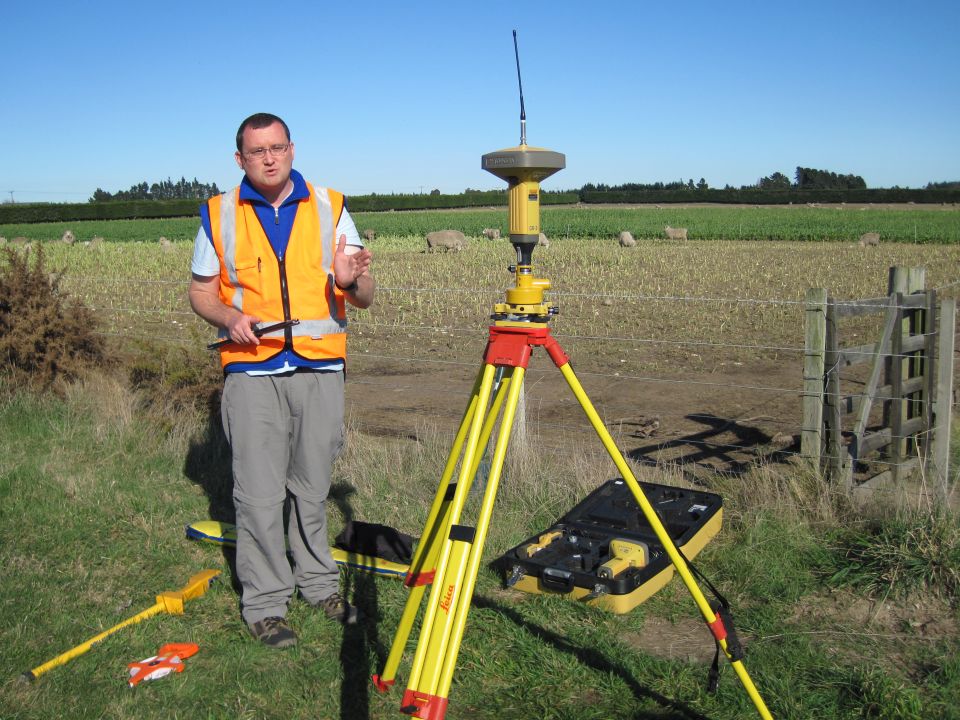
Autonomous vehicles (AVs) are revolutionizing the transportation industry, paving the way for a future where cars drive themselves with minimal human intervention. One of the most crucial technologies that power autonomous vehicle navigation is Global Navigation Satellite System (GNSS) positioning. GNSS is the backbone of the navigation system for these vehicles, providing precise location and timing data. This article explores how gnss positioning system enhances autonomous vehicle navigation, the role it plays in ensuring safety, and its integration with other sensor technologies.
What is GNSS Positioning?
GNSS refers to a constellation of satellites that transmit signals to the Earth, allowing receivers to calculate their position and time. The most well-known GNSS systems are the U.S.-based GPS, Russia’s GLONASS, Europe’s Galileo, and China’s BeiDou. These systems work together to provide continuous, worldwide coverage of positioning data.
In autonomous vehicles, GNSS is crucial for providing real-time, accurate positioning information, which is needed for safe and efficient navigation. However, GNSS alone is not enough to fully navigate a vehicle. It must be integrated with other sensors such as LIDAR, radar, and cameras to provide a complete understanding of the vehicle’s surroundings.
Role of GNSS in Autonomous Vehicle Navigation
GNSS positioning enhances autonomous vehicle navigation in several key ways, contributing to the precision, reliability, and safety of the vehicle. Let’s explore how this technology plays a vital role:
1. Precise Localization
For an autonomous vehicle to safely navigate, it needs to know its precise location at all times. GNSS positioning provides centimeter-level accuracy, which is critical for operations in complex environments such as city streets, highways, and intersections. By utilizing GNSS, AVs can pinpoint their location relative to maps, road lanes, and nearby landmarks. This allows the vehicle to make informed decisions about acceleration, braking, and steering.
2. Seamless Route Planning and Navigation
Autonomous vehicles use GNSS positioning to plan and follow routes with accuracy and efficiency. With continuous positioning data, the vehicle can determine the best path, avoid obstacles, and adjust its course when needed. GNSS also enables real-time rerouting in case of traffic jams or road closures, ensuring the vehicle follows the optimal path at all times.
3. Improved Safety and Collision Avoidance
Safety is a top priority for autonomous vehicle systems, and GNSS positioning plays a key role in collision avoidance. By accurately determining the vehicle’s position in relation to other objects and vehicles, GNSS allows the AV to respond to dynamic situations quickly. When paired with other sensors, such as cameras and radar, GNSS helps the vehicle identify potential hazards, including pedestrians, cyclists, and other cars, and take appropriate action.
4. High-Speed Operation
Autonomous vehicles must be able to navigate safely at high speeds, especially on highways. GNSS positioning is instrumental in enabling high-speed operation by ensuring accurate positioning and minimizing errors due to GPS signal loss or interference. High-precision GNSS systems allow AVs to maintain a steady, predictable path even in high-speed scenarios, which is essential for smooth and safe highway driving.
GNSS Challenges in Autonomous Vehicle Navigation
While GNSS positioning is integral to autonomous vehicle navigation, it is not without its challenges. GNSS signals can sometimes be weak or unreliable, especially in urban environments with tall buildings (urban canyons), tunnels, or areas with dense foliage. This is where integrating GNSS with other sensor systems like LIDAR, radar, and cameras becomes essential. These sensors can help the vehicle maintain accurate positioning even when GNSS signals are degraded or lost.
Moreover, in certain situations, such as in extreme weather conditions or in environments with heavy electromagnetic interference, GNSS accuracy can be compromised. To address these challenges, advancements in multi-constellation GNSS, sensor fusion, and correctional technologies like RTK (Real-Time Kinematic) and PPP (Precise Point Positioning) are being employed to improve the reliability and precision of GNSS data.
Conclusion
GNSS positioning is a critical component of autonomous vehicle navigation, enhancing their ability to navigate accurately and safely. It provides precise localization, facilitates seamless route planning, and ensures vehicle safety by allowing for real-time responses to dynamic conditions. As autonomous vehicle technology continues to evolve, GNSS positioning will remain a key enabler in creating safer, more efficient transportation systems.
